Blog
Urine dilution is an important part of managing many urinary tract problems. Some urinary diets therefore deliberately raise the sodium content to stimulate drinking and urine production.
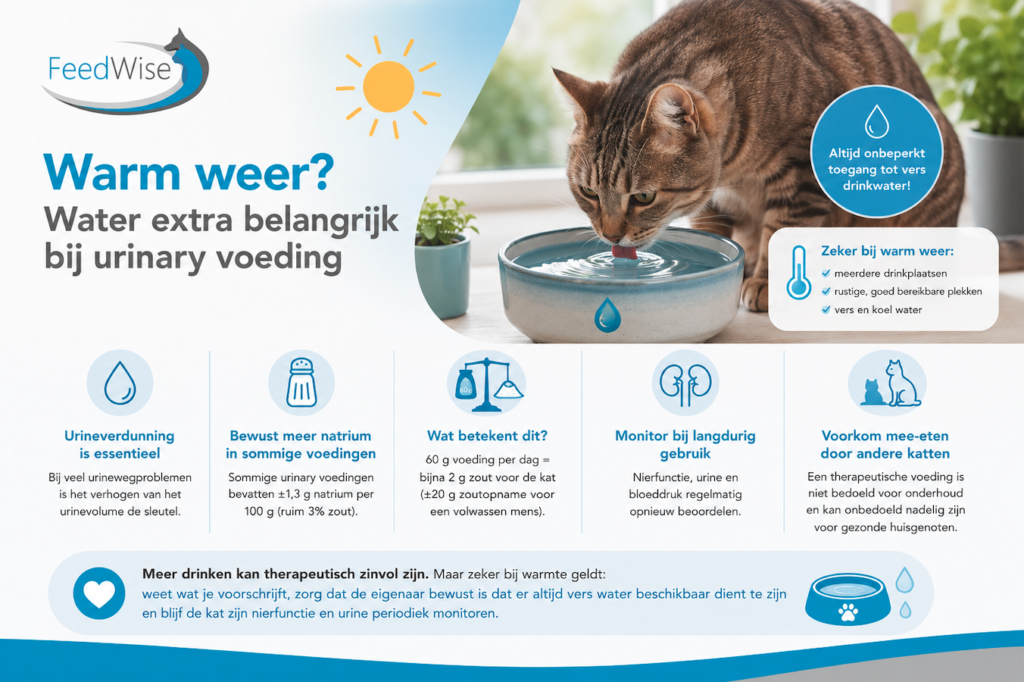
Some diets contain around 1.3 grams of sodium per 100 grams, equivalent to over 3% salt. A cat eating 60 grams of this per day takes in almost 2 grams of salt. 🧂
That is not necessarily wrong, but it does call for deliberate prescribing and a clear explanation to the owner.
Especially in warm weather, the cat must always have unlimited access to sufficient fresh drinking water, preferably in several quiet, easily accessible places. 💦
With long-term use, it is also wise to reassess kidney function, urine and blood pressure at regular intervals. 🩺
Also prevent other cats in the household from routinely sharing the food. A therapeutic diet is not intended for maintenance and can be unintentionally disadvantageous for healthy housemates. 🐈🐈⬛
Drinking more can be therapeutically valuable. But especially in the heat: know what you prescribe, make sure the owner understands the importance of fresh water that is always available, and keep monitoring the cat periodically.